



In a world that moves fast, judgment comes even faster.
A clip goes viral. A comment gets posted. A headline gets shared. Within seconds, people decide what they think they know. They draw conclusions about someone’s character, motives, and worth without context, without conversation, and without curiosity.
I know this feeling personally.
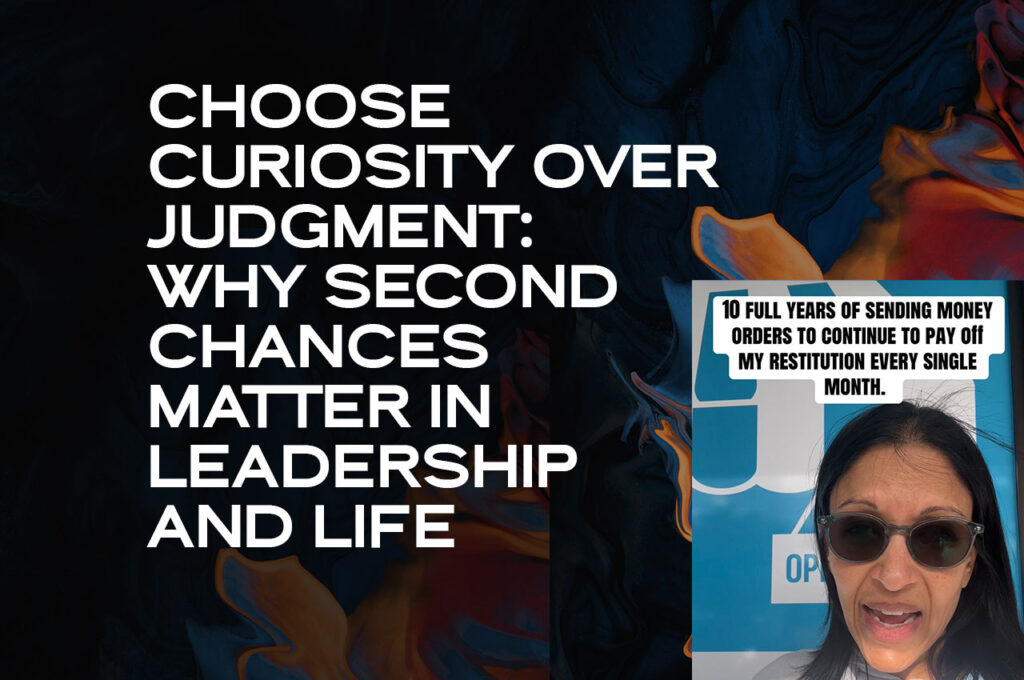
Recently, I posted a video on TikTok that went viral. On one hand, I am grateful for the reach. I am grateful for the opportunity to share my story and my message with more people. But visibility has a shadow side. The more people who see you, the more people assume they know you. They take one moment, one detail, one chapter, and use it to define your whole life.
That is the part many people do not see.
It is not just the exposure. It is the judgment.
It is the ease with which people make assumptions. It is the confidence with which strangers decide who you are. It is the cruelty that can come when someone feels protected by distance and anonymity.
And it raises a deeper question for me: what happened to curiosity?
What happened to giving people the benefit of the doubt? What happened to second chances? What happened to the belief that people can take responsibility for their past, learn from it, and become better because of it?
Judgment is fast because it is easy. Curiosity asks more of us.
Curiosity requires a pause. It asks us to slow down long enough to question the story we are telling ourselves. It asks us to consider that there may be more truth beneath the surface than we can see in a single moment.
That is not always comfortable. In fact, it can be inconvenient. It is easier to label than to understand. Easier to condemn than to reflect. Easier to place someone in a box than to hold the complexity of a human life.
But leadership and growth demand more from us than easy reactions.
I am not defined by my past bad decisions.
I am shaped by what I chose to do after them.
For the last decade, I have immersed myself in behavioral science, decision making, cognitive bias, and the psychology of how good people make choices they later regret. I did not go down that path to excuse what happened in my own life. I did it because I needed to understand it. I needed to know how pressure, fear, rationalization, and blind spots can quietly shape our decisions before we even realize what is happening.
That research changed me.
It gave me language for what I had lived. It gave me insight into how decision making breaks down under pressure. Most importantly, it gave me purpose. Today, my mission is to help others build guardrails around their thinking so they can make better decisions, deepen trust, strengthen connection, and perform at a higher level.
My story may begin with failure, but it does not end there.
Second chances do not mean the past did not happen. They do not cancel consequences. They do not remove accountability.
They make transformation possible.
That distinction matters.
Real accountability should deepen us. It should awaken us to what is true. It should call us into greater responsibility, humility, and growth. Accountability should not become a permanent identity sentence. It should become an invitation to evolve.
When we leave no room for redemption, we create a culture where people hide. They protect themselves. They defend instead of reflect. They perform instead of tell the truth.
But when we create room for accountability and growth to exist together, something powerful happens. People become more honest. Teams become more trusting. Leaders become more self aware. Relationships have a chance to repair.
This is true in organizations. It is true in families. It is true in communities. It is true within ourselves.
Curiosity is not softness. It is not a lack of standards. It is not permission for harmful behavior.
Curiosity is discipline.
It is the discipline to pause before making assumptions. It is the discipline to separate facts from the stories in your head. It is the discipline to ask what pressure, fear, ego, or pain might be sitting beneath the behavior you are judging.
Curiosity helps leaders respond with wisdom instead of reaction.
In the workplace, that changes how feedback is delivered, how trust is built, and how accountability is handled. In life, it changes how we speak to our partners, our children, our colleagues, our communities, and ourselves.
When leaders choose curiosity over judgment, they create cultures where truth can surface and growth can happen.
When you feel yourself moving quickly into judgment, ask one question:
What story am I telling right now?
That question interrupts the automatic narrative. It creates space. It helps you notice whether you are responding to facts or assumptions. It gives you a chance to examine your own bias before it hardens into certainty.
Sometimes the story is about someone else.
Sometimes the story is about yourself.
Maybe the story is that people never change.
Maybe the story is that one failure defines your future.
Maybe the story is that someone’s worst moment tells you everything you need to know.
But stories are not always truth.
Curiosity gives you the chance to find out what is.
This is the heart of my work.
Rise Through It® is not about denying pain or bypassing the past. It is about facing reality honestly and refusing to let shame, fear, or judgment become the end of the story. It is about choosing growth with intention. It is about building the mental and emotional guardrails that help us make clearer decisions when the stakes are high.
In a culture that is quick to judge, curiosity is a powerful act of leadership.
In a world that wants to freeze people in their past, growth is a radical choice.
And in a time when so many are craving trust, honesty, and deeper connection, second chances matter more than ever.
Before you write someone off, pause.
Before you decide you know the full story, get curious.
Before you lock yourself or someone else inside one painful chapter, remember that people are capable of change.
I believe in accountability. I believe in truth. And I believe in redemption.
Because second chances do not erase the past. They create the possibility of a better future.
Curiosity helps leaders slow down, challenge assumptions, and make wiser decisions. It builds trust, improves communication, and creates space for accountability and growth.
It means pausing before forming conclusions, asking better questions, and making room for context and humanity. It does not remove standards. It improves how we respond.
Yes. Accountability is about owning the truth and taking responsibility. Redemption is about what becomes possible after that truth is faced honestly. The two belong together.
Behavioral science helps explain how pressure, urgency, cognitive bias, fear, and rationalization can shape choices. Understanding these patterns helps people build better guardrails for decision making.
Guardrails are mental processes and reflective questions that help us slow down, notice bias, and make clearer choices under pressure. They support trust, connection, and stronger performance.
Rise Through It® is my framework for facing struggle, uncertainty, and consequences with honesty and intention so that growth, resilience, and transformation become possible.
Second chances allow people to learn, repair, evolve, and contribute in meaningful ways. Without the possibility of growth, accountability can turn into shame instead of transformation.